
Introduction: The Smartest Step You Can Take Before Building Anything
Mood boards matter before interior execution because they help you see your space before money leaves your account. Simple. Before tiles are laid, furniture is bought, or walls are knocked down, a mood board aligns ideas, controls cost, avoids confusion, and saves you from expensive “I don’t like it anymore” moments.
Think of a mood board as the dress rehearsal before the main performance. Nobody walks into a wedding without fittings. Your interior project deserves the same respect.
In Nigeria—where prices change fast, materials vary in quality, and mistakes cost real money—skipping this step is like building blindfolded. Let’s break down why mood boards aren’t just “nice to have,” but absolutely necessary.
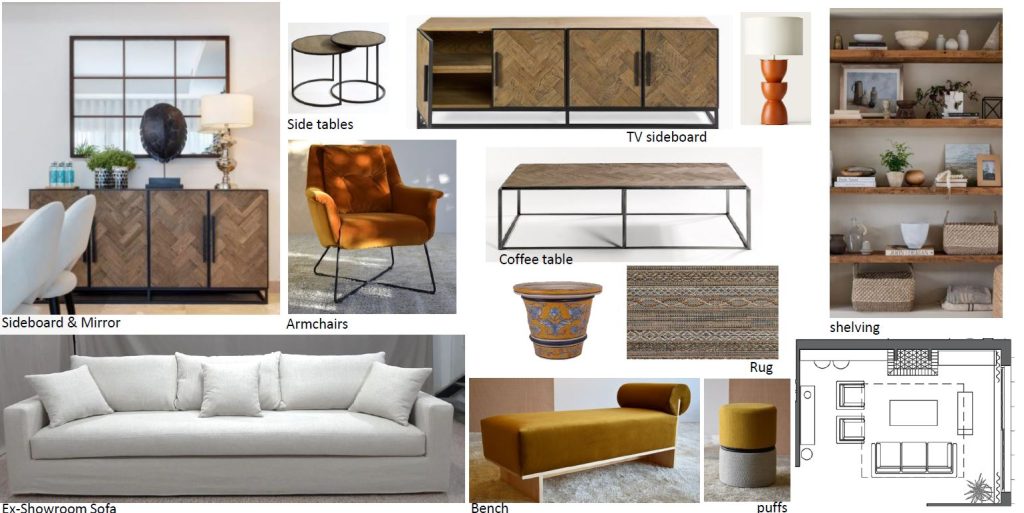
What Is a Mood Board in Interior Design?
A mood board is a visual plan that brings together everything that defines the look and feel of a space. It’s where ideas stop floating and start making sense.
A typical interior mood board includes:
- Color palettes
- Materials (tiles, wood, fabrics, finishes)
- Furniture styles
- Lighting inspiration
- Textures and patterns
- Decorative elements
Instead of guessing what “modern luxury” or “minimalist cozy” means, a mood board shows it clearly.
Why Mood Boards Matter Before Interior Execution
1. They Turn Vague Ideas into Clear Vision
Most clients say things like:
- “I want something classy.”
- “I like modern but not too cold.”
- “I want it simple but luxurious.”
Nice words. Zero clarity.
A mood board translates those feelings into visual direction. Once you see colors, textures, and furniture together, decisions become easier—and arguments reduce drastically.
No more “That’s not what I imagined” halfway into the project.
2. They Save You Money (Yes, Real Money)
Interior mistakes are expensive. Very expensive.
Mood boards help you:
- Avoid buying wrong materials
- Prevent last-minute changes
- Reduce waste and rework
- Stick to your budget
In Nigeria, where exchange rates and material costs fluctuate, correcting mistakes can double your expenses. A mood board helps you decide once and execute right.
3. They Keep Everyone on the Same Page
Interior projects involve:
- Clients
- Designers
- Contractors
- Carpenters
- Electricians
- Painters
Without a mood board, everyone has a different picture in their head. That’s chaos waiting to happen.
A mood board becomes the reference point everyone follows. When questions arise, you don’t argue—you point.
4. They Help You Choose Materials Wisely
Not all tiles, woods, or fabrics behave the same way—especially in Nigeria’s climate.
Mood boards allow you to:
- Compare materials visually
- Test color combinations
- Balance durability with aesthetics
- Avoid clashes between finishes
That glossy tile might look good alone but terrible beside your cabinets. Mood boards catch that early.
Recommended: Cost of Mood Board & Concept Development Services in Lagos, Nigeria
Mood Boards vs. Jumping Straight to Execution
Here’s a quick comparison:
| With Mood Board | Without Mood Board |
|---|---|
| Clear design direction | Constant confusion |
| Controlled budget | Unplanned expenses |
| Faster execution | Delays and rework |
| Happy client | Frustrated client |
| Professional outcome | Risky guesswork |
Simple truth: Mood boards reduce regret.
Why Mood Boards Are Even More Important in Nigeria
Nigeria’s interior design market is unique:
- Materials vary by supplier
- Imported items can delay projects
- Skilled labor quality differs
- Prices change quickly
Mood boards help you plan around reality, not assumptions. You can substitute materials smartly, adjust expectations, and still maintain the design integrity.
This isn’t luxury—it’s smart planning.
Do Mood Boards Limit Creativity?
Short answer: No. They guide it.
Mood boards don’t box you in. They:
- Create boundaries that protect the design
- Allow creativity within structure
- Help refine ideas instead of killing them
Think of them like Google Maps. You still choose the route, but you won’t get lost.
How Mood Boards Improve Client Confidence
Clients feel calmer when they can see what they’re paying for.
A mood board:
- Builds trust
- Reduces fear of the unknown
- Shows professionalism
- Makes decision-making easier
When clients feel confident, projects move faster. Simple.
What Happens After the Mood Board Is Approved?
Once the mood board is finalized:
- Design concepts are locked
- Materials are sourced correctly
- Execution becomes smoother
- Fewer surprises happen on site
At this stage, interior execution becomes less stressful and more predictable—which is exactly what you want.
Common Mistakes People Make Without Mood Boards
Let’s be honest. We’ve seen it all:
- Buying furniture before measuring
- Mixing too many styles
- Choosing trendy items that age badly
- Spending money twice
Mood boards help you pause, plan, and proceed wisely.
Are Mood Boards Only for Big Projects?
Not at all.
Whether it’s:
- A one-bedroom apartment
- A salon
- An office space
- A kitchen remodel
Mood boards scale to fit the project. Even small spaces deserve thoughtful planning.
How Professional Designers Use Mood Boards
Designers use mood boards to:
- Present ideas clearly
- Justify design choices
- Avoid misunderstandings
- Maintain consistency
It’s not just about beauty—it’s about process and precision.
Frequently Asked Questions About Mood Boards
Do mood boards replace 3D designs?
No. Mood boards come before 3D designs. They set the foundation that 3D visuals build on.
Can I make a mood board myself?
Yes, but professional mood boards consider scale, material behavior, lighting, and execution realities.
How long does a mood board take?
Usually a few days, depending on project size—but it saves weeks of correction later.
Are mood boards expensive?
Compared to redoing interiors? Not even close.
The Psychology Behind Mood Boards (Why They Work)
Humans process visuals faster than words. Mood boards:
- Reduce decision fatigue
- Improve understanding
- Create emotional connection
When you see something, you trust it more. That’s psychology working in your favor.
Final Thoughts: Don’t Build Blind
Mood boards matter before interior execution because they protect your vision, your money, and your peace of mind.
Skipping this step doesn’t save time—it creates problems. In interior design, clarity is everything, and mood boards deliver that clarity upfront.
Before you build, pause. Visualize. Align. Then execute.
Ready to start your interior project the right way?
Begin with a well-thought-out mood board and watch your space come together smoothly, beautifully, and stress-free.